
Introduction
India’s defence sector has gained increasing attention as the country focuses on strengthening domestic manufacturing, modernising military equipment and reducing dependence on imports. This changing environment has also increased interest in defence stocks among investors looking for companies connected with aerospace, electronics, shipbuilding, engineering, communication systems and military equipment. The sector combines strategic national importance with long-term industrial opportunities, making it an interesting area for market research.
However, defence-related companies can behave differently from companies in conventional industries. Their performance may depend on government orders, defence budgets, project execution, technological capabilities and the timing of large contracts. Investors therefore need to understand both the opportunity and the risks before making decisions. Instead of focusing only on recent price movements, it is useful to examine a company’s financial strength, order book, business model, valuation and ability to execute long-term projects.
What Are Defence Stocks?
Defence stocks are shares of publicly listed companies that generate a significant portion of their business from defence-related products or services. These businesses may manufacture aircraft components, naval vessels, missiles, radar systems, communication equipment, electronic systems, vehicles or other specialised products. Some companies also provide maintenance, repair, engineering and technology services to defence organisations.
The defence industry is different from many consumer-facing sectors because government agencies are often major customers. Contracts can be large and may continue over several years. This can provide companies with visibility into future revenue, particularly when their order books remain strong. At the same time, the concentration of government business means that changes in procurement priorities, regulations or project schedules can affect financial performance. Understanding this relationship is essential when analysing companies in the sector.
Why Is India’s Defence Sector Getting Attention?
India has been increasing its focus on domestic defence production and technological capability. The broader objective is to develop stronger local manufacturing, encourage private-sector participation and improve the country’s ability to design and produce critical defence equipment. This creates potential opportunities for companies involved in manufacturing, electronics, engineering, shipbuilding and aerospace.
Another important factor is the modernisation of defence equipment. Military forces require increasingly sophisticated communication systems, surveillance technologies, aircraft, naval platforms and electronic equipment. As requirements evolve, companies with strong engineering capabilities and specialised technology may find opportunities to participate in new projects.
The combination of domestic procurement, modernisation and export ambitions has made the sector an important area for investors to monitor. Nevertheless, increasing attention does not automatically mean every company will deliver strong returns. Individual business quality and valuation remain important.
Major Factors That Can Influence Defence Stocks
Several factors can affect the performance of defence stocks. Government spending is one of the most important because defence companies often depend heavily on institutional procurement. A larger allocation does not necessarily translate immediately into higher revenue, since contracts can involve lengthy approval, manufacturing and delivery processes.
The order book is another major consideration. A strong order book can provide greater visibility into future business, but investors should examine whether those orders are profitable and realistically executable. The quality of the order book matters as much as its size.
Technology is also becoming increasingly important. Companies developing advanced electronics, avionics, radar, communication systems and other specialised technologies may have opportunities to participate in higher-value projects. Investors should therefore look beyond revenue and examine research capabilities, technical expertise and intellectual property where relevant.
| Factor | Why It Matters |
|---|---|
| Government spending | Influences industry demand |
| Order book | Indicates potential future revenue |
| Profit margins | Shows business efficiency |
| Technology | Supports long-term competitiveness |
| Export potential | Can expand the customer base |
| Debt levels | Indicates financial risk |
| Valuation | Helps assess market expectations |
Understanding the Order Book
The order book is frequently discussed when evaluating defence stocks, but it should not be viewed as a guaranteed source of future profit. An order represents contracted business, while actual revenue recognition can occur over several years. Delays in production, testing, approvals, supply chains or delivery schedules can change the timing of revenue.
Investors should therefore compare an order book with annual revenue and production capacity. A very large order book may appear attractive, but the company must have sufficient manufacturing facilities, skilled employees and suppliers to complete those projects.
It is also useful to examine the composition of orders. A diversified order book involving several products and customers may reduce concentration risk. Conversely, dependence on one major project can increase uncertainty if that programme experiences delays.
Financial Metrics Investors Should Watch
Investors studying defence stocks should examine traditional financial measures alongside industry-specific information. Revenue growth provides an indication of how quickly the business is expanding, while operating margins can show whether the company is converting sales into operating profits efficiently.
Cash flow deserves particular attention. A company may report accounting profits while experiencing significant working-capital requirements. Large projects can require substantial investment before payments are received. Examining operating cash flow, receivables and inventory can therefore provide additional insight.
Debt is another important factor. Companies with manageable debt may have greater flexibility to invest in manufacturing capacity and technology. Investors should also consider return on capital, earnings growth and valuation ratios rather than relying on a single metric.
Some useful areas to review include:
- Revenue and profit growth
- Operating and net profit margins
- Debt and interest obligations
- Operating cash flow
- Order-book quality
- Return on capital
- Valuation compared with expected growth
Defence Stocks and Export Opportunities
Exports can become an important growth avenue for Indian defence manufacturers. A company that successfully develops products for international customers can reduce its dependence on domestic procurement and potentially expand its addressable market.
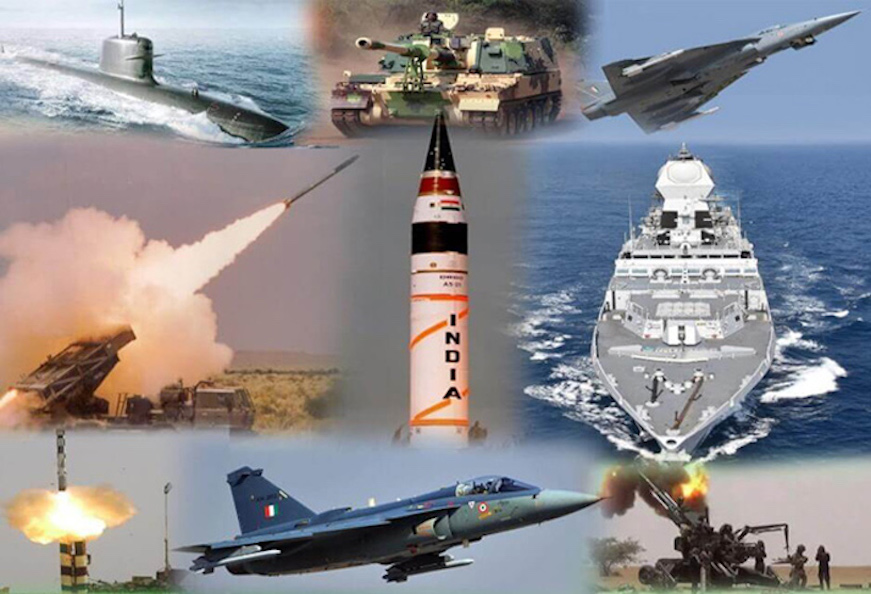 However, international defence contracts often involve strict technical, regulatory and geopolitical requirements. Companies may need to demonstrate consistent quality, competitive pricing, reliable delivery and long-term support capabilities. Building a sustainable export business can therefore take considerable time.
For investors, export growth can be a positive indicator when it is supported by genuine customer demand and repeat business. It is important to distinguish between announcements and actual commercial execution. A growing international presence can strengthen a company’s business model, but investors should continue monitoring the financial contribution from exports.
Risks Associated With Defence Stocks
Despite their growth potential, defence stocks carry several risks. One major risk is their dependence on government procurement. Changes in priorities, project schedules or procurement policies can influence future orders.
Valuation is another concern. When a sector becomes popular, share prices can sometimes rise faster than underlying earnings. This can create high expectations for future growth. If earnings fail to meet those expectations, the stock may experience significant volatility.
Execution risk is also important. Large defence projects can involve complex engineering, multiple suppliers and strict testing requirements. Delays can affect revenue recognition and profitability.
Other potential risks include:
- High market valuations
- Project execution delays
- Customer concentration
- Supply-chain disruptions
- Technology changes
- Regulatory or policy changes
How to Analyse a Defence Company
A sensible analysis should begin with the company’s business model. Investors should understand exactly what the company manufactures or provides and identify its major customers. The next step is to examine historical revenue, profits and cash flow.
After that, investors can study the order book and determine how much of it relates to established programmes versus newer opportunities. Manufacturing capacity and project execution history can provide additional context.
Management quality is also important. Companies operating in technically demanding industries require strong engineering, financial and operational management. Investors can review annual reports, financial statements and corporate announcements to develop a more complete picture.
Finally, valuation should be considered. Even a high-quality company can become an expensive investment if its market price already reflects extremely optimistic future growth.
Long-Term Outlook
The long-term outlook for defence stocks will depend on several structural trends, including domestic manufacturing, military modernisation, technology development and export opportunities. Companies that successfully combine engineering expertise, manufacturing capability and financial discipline may be better positioned to benefit from these trends.
At the same time, investors should remember that sector growth and stock performance are not identical. A growing industry can contain companies with very different financial results. Some businesses may benefit strongly from new contracts, while others may struggle with execution or high costs.
A long-term approach should therefore focus on business fundamentals rather than short-term market excitement. Investors can monitor earnings, order inflows, cash generation, capacity expansion and valuation over time.
Conclusion
Defence stocks have become an important area of interest as India works toward stronger domestic defence capabilities and greater technological self-reliance. The sector offers potential opportunities across aerospace, electronics, shipbuilding, engineering and specialised manufacturing. Strong order books, modernisation programmes and export possibilities can support long-term industry development.
However, investors should not select shares solely because the defence sector is growing. Government dependence, execution challenges, high valuations and project delays can create meaningful risks. Careful analysis of financial statements, order quality, profitability, debt, cash flow, technology and valuation can help investors make more informed decisions. Ultimately, the strongest opportunities are likely to be found among businesses that can consistently convert industry demand into sustainable earnings and cash flow.