
The transition toward cleaner energy is becoming an increasingly important part of the global power industry. Governments, utilities, manufacturers, and technology companies are investing in solar, wind, battery storage, green hydrogen, transmission infrastructure, and other technologies designed to support a lower-carbon electricity system. For investors, this transformation has created growing interest in green energy stocks, particularly companies with exposure to renewable generation, clean-energy equipment, energy storage, and supporting infrastructure.
India provides an especially interesting backdrop for this theme. According to the Ministry of New and Renewable Energy, cumulative renewable-energy capacity excluding large hydro reached about 243.49 GW by August 31, 2026, while total renewable capacity including large hydro stood at approximately 295.55 GW. Solar alone accounted for about 168.04 GW, demonstrating how quickly renewable generation has expanded.
However, rapid industry expansion does not automatically mean that every renewable-energy company will deliver strong shareholder returns. Green energy stocks can be influenced by interest rates, project costs, electricity tariffs, government policies, equipment prices, financing conditions, competition, and valuations. Understanding the business behind a stock is therefore just as important as understanding the long-term renewable-energy opportunity.
What Are Green Energy Stocks?
Green energy stocks generally refer to publicly traded companies that generate revenue from renewable or environmentally focused energy activities. The category can include solar and wind power producers, hydroelectric companies, battery-storage businesses, renewable-energy developers, equipment manufacturers, transmission companies, and businesses involved in emerging areas such as green hydrogen.
The category is broader than simply owning a solar-power company. A business may participate in the renewable-energy ecosystem by manufacturing modules, developing wind farms, supplying inverters, operating transmission networks, providing engineering services, or building energy-storage systems. This means two companies described as green-energy businesses can have very different revenue models, capital requirements, debt levels, and growth prospects.
Investors should therefore look beyond the environmental theme itself. A company with renewable assets may have long-term power-purchase agreements that provide relatively predictable revenue, while another business may depend heavily on new project awards and financing. Understanding this distinction can make financial analysis considerably more meaningful.
Why Renewable Energy Is Receiving Greater Attention
The renewable-energy industry is benefiting from several structural changes in the electricity market. Electricity demand is increasing because of industrial expansion, digital infrastructure, electric mobility, air-conditioning demand, and the growth of data-intensive technologies. At the same time, countries are seeking to diversify their energy supplies and increase domestic electricity-generation capacity.
India’s renewable-energy expansion illustrates this trend. By August 2026, the country had approximately 168.04 GW of installed solar capacity and 58.52 GW of wind capacity, according to MNRE data. During April-August 2026 alone, India added more than 17.7 GW of solar capacity and about 2.4 GW of wind capacity.
This expansion creates potential business opportunities throughout the electricity value chain. Developers can construct new projects, equipment manufacturers can supply components, transmission companies can connect generation to demand centers, and storage providers can help address the intermittent nature of solar and wind power.
Major Segments Within Green Energy Stocks
Solar Energy Companies
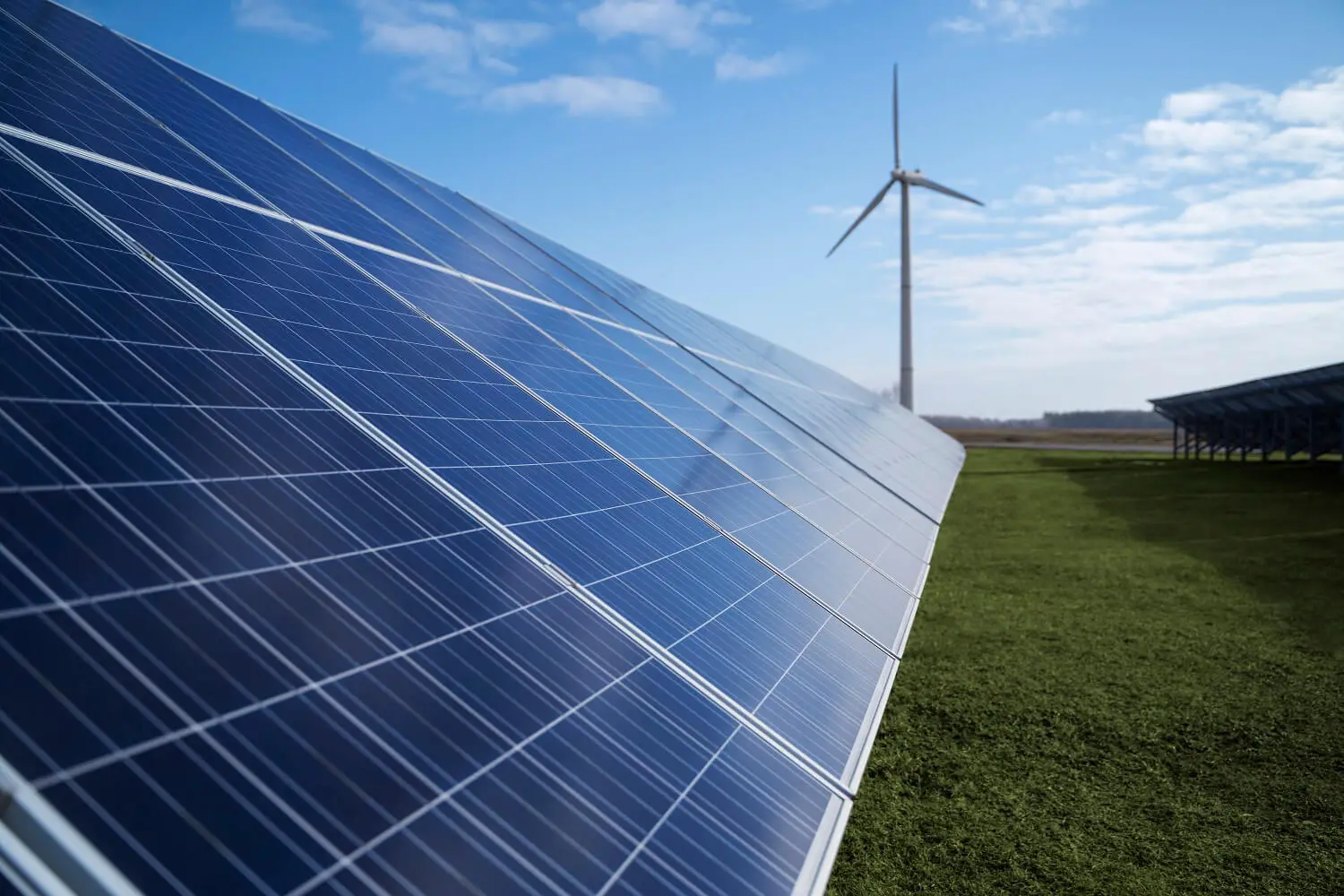
Solar power has become one of the most visible parts of the renewable-energy industry. Solar developers can generate revenue by owning and operating utility-scale projects, while manufacturers may benefit from demand for photovoltaic modules, cells, inverters, and related equipment.
The economics of solar projects depend heavily on capital expenditure, module prices, financing costs, project efficiency, capacity utilization, and contracted electricity tariffs. Investors therefore need to examine whether a company’s growth comes from profitable projects or simply from expanding its asset base.
Wind and Hybrid Energy Businesses
Wind power remains another important renewable-energy segment. Hybrid projects combining solar and wind generation can potentially improve utilization of transmission infrastructure and provide a more balanced generation profile.
Government guidelines in India include competitive-bidding frameworks for wind, solar, hybrid projects, and renewable projects paired with energy-storage systems. This creates opportunities for developers with the financial and technical capabilities to compete for large projects.
Hydro and Pumped Storage
Hydropower has characteristics that differ from solar and wind. Conventional hydro projects can provide electricity over extended periods, while pumped-storage facilities can function somewhat like large-scale energy-storage systems by moving electricity between periods of lower and higher demand.
Companies involved in hydroelectric generation may therefore have exposure to both renewable generation and grid-balancing requirements. Nevertheless, project-development timelines, environmental considerations, construction costs, and financing requirements need careful examination.
Battery Storage and Emerging Technologies
Energy storage is becoming increasingly important as renewable generation grows. Solar production naturally varies throughout the day, while wind generation depends on weather conditions. Storage can help shift electricity from periods of high renewable production toward periods of greater demand.
Green hydrogen is another developing area. Although its commercial economics are still evolving, companies and governments continue exploring hydrogen for industrial applications, transport, and energy storage. Investors should treat emerging technologies differently from mature power-generation businesses because commercial scalability and profitability may remain uncertain.
Key Factors to Examine Before Buying Green Energy Stocks
A strong renewable-energy theme is only one part of an investment analysis. Investors should examine the underlying company’s financial statements, business model, project pipeline, debt obligations, cash flow, and valuation.
One particularly important factor is return on capital. Renewable projects can require substantial upfront investment, meaning a company may report rising revenue while simultaneously taking on significant debt. Revenue growth alone therefore does not establish that the business is creating attractive economic returns.
Investors can examine factors such as:
- Revenue and profit growth over multiple years rather than a single quarter.
- Debt levels, interest costs, and operating cash flow.
- Project pipeline, capacity additions, and contracted revenue.
- Valuation compared with earnings, cash flows, and growth expectations.
Another consideration is the quality of the company’s assets. Two businesses may have similar installed capacity but very different financial performance because of differences in project locations, tariffs, equipment efficiency, financing costs, and operating expenses.
Green Energy Stocks and the Importance of Valuation
One of the biggest mistakes investors can make with fast-growing industries is assuming that strong industry growth automatically makes every stock attractive. Stock prices reflect expectations about future earnings, not merely current industry conditions.
A company operating in a rapidly expanding renewable-energy market can still become expensive if investors have already priced in years of exceptional growth. Conversely, a business with slower expansion may have characteristics that justify closer analysis because of stable cash generation, established assets, or a stronger balance sheet.
For this reason, green energy stocks should be evaluated through both business fundamentals and valuation. Metrics such as price-to-earnings ratio, enterprise value relative to operating earnings, price-to-book ratio, free cash flow, return on equity, and debt-to-equity can provide useful context, although no single metric is sufficient.
Selected Areas of the Indian Renewable-Energy Market
The Indian market includes established utilities, renewable-focused companies, independent power producers, equipment manufacturers, and diversified energy businesses. The following table illustrates the types of businesses investors may encounter rather than identifying any particular stock as a preferred investment.
| Renewable-energy segment | Typical business activity | Key factor to examine |
|---|---|---|
| Solar developers | Build and operate solar projects | Tariffs, capacity utilization and financing |
| Wind developers | Operate wind-generation assets | Resource quality and project economics |
| Renewable-focused utilities | Develop multiple clean-energy assets | Portfolio quality and capital allocation |
| Equipment manufacturers | Produce modules, cells or components | Demand, margins and manufacturing scale |
| Storage businesses | Provide batteries and storage systems | Costs, utilization and commercial adoption |
| Hydro and pumped storage | Generate or store electricity | Project execution and long-term demand |
India’s broader electricity planning also points toward substantial renewable expansion. The Central Electricity Authority’s National Electricity Plan projected renewable sources to contribute around 35.04% of total electricity generation in 2026-27 and about 43.96% in 2031-32, based on its planning assumptions. These are projections rather than guaranteed outcomes, but they demonstrate the scale of the planned transition.
How Policy Can Affect Renewable-Energy Companies
Government policy can have a meaningful influence on renewable-energy businesses. Renewable projects frequently depend on regulations covering auctions, transmission access, domestic manufacturing, grid connectivity, tariffs, environmental approvals, and energy-storage deployment.
India continues to maintain competitive-bidding frameworks for solar, wind, hybrid renewable projects, and renewable projects incorporating storage. The government has also continued updating policies concerning domestic solar-module and solar-cell supply chains through the Approved List of Models and Manufacturers framework.
For investors, this means policy developments should be considered alongside company-specific fundamentals. A policy change can affect an entire industry, while an execution problem can affect only one company. Separating these two types of risk is important when assessing renewable businesses.
Risks Associated With Green Energy Stocks
Renewable-energy businesses have significant opportunities, but they also face risks. Project development can require large amounts of capital, and higher borrowing costs can affect project economics. Delays in land acquisition, transmission connectivity, equipment supply, or regulatory approvals can also postpone revenue generation.

Competition is another important consideration. If several developers compete aggressively for projects, electricity tariffs can become highly competitive. Lower tariffs may benefit electricity consumers but can place pressure on project returns when construction and financing costs remain elevated.
Technology risk should also not be ignored. Solar modules, batteries, storage systems, and other technologies continue to evolve. Companies that invest heavily in a technology that becomes less competitive could face weaker returns or asset write-downs.
The Role of Financial Discipline
Financial discipline can be particularly important for green energy stocks because renewable infrastructure generally requires substantial upfront investment. A company may need to borrow money to construct projects today while receiving project-related cash flows over many years.
This creates a balance between expansion and financial stability. Rapid capacity additions can increase future revenue, but excessive borrowing can increase interest expenses and financial risk. Investors can therefore examine whether new projects are being funded through internally generated cash, equity, debt, or combinations of these sources.
Cash flow deserves special attention. Accounting profit and actual cash generation can differ considerably in capital-intensive businesses. Examining operating cash flow, capital expenditure, financing requirements, and free cash flow can provide a clearer picture of the company’s financial position.
Green Energy Stocks in a Changing Power Market
The renewable-energy industry is increasingly connected to other parts of the power ecosystem. Growth in solar and wind generation increases the importance of transmission networks, forecasting systems, flexible generation, and storage.
This creates a broader investment theme beyond simply renewable electricity generation. Companies involved in grid infrastructure, power equipment, storage, energy management, and electricity distribution may also benefit from rising investment in the modern power system.
At the same time, the transition will not happen uniformly. Renewable projects need suitable land, transmission capacity, financing, equipment, and grid integration. Therefore, the companies capable of executing projects efficiently may have different financial outcomes from companies that simply operate in the same broad industry.
How Investors Can Research Green Energy Stocks
Research should begin with the company’s latest annual report and financial results. Investors can then examine revenue sources, operating margins, debt, cash flow, capacity, project pipeline, and management’s stated expansion plans.
It is also useful to understand how much of the company’s business is actually connected to renewable energy. A diversified utility may have substantial exposure to conventional power alongside renewable assets, while a renewable-focused developer may have a very different risk profile.
Investors should also compare a company’s valuation with its own historical levels and with businesses that have similar operating models. A renewable developer, equipment manufacturer, and diversified utility should not automatically be valued using identical assumptions.
Conclusion
The long-term expansion of renewable electricity is creating a large and evolving investment landscape. India’s renewable-energy capacity has continued to expand rapidly, with solar and wind representing major components of the country’s clean-energy buildout. This structural development helps explain why green energy stocks continue to attract attention from investors interested in the energy transition. Nevertheless, the renewable-energy theme should not be confused with a guarantee of investment returns. Company-specific execution, project economics, debt, cash flow, competition, policy changes, technology, and valuation can all materially influence shareholder outcomes. The most useful approach is therefore to study each business individually rather than treating every renewable-energy company as interchangeable.