
Semiconductor stocks represent companies involved in designing, manufacturing, packaging, testing, or supplying the tiny chips that power modern technology. These components are essential to smartphones, computers, automobiles, industrial equipment, communication networks, medical devices, and data centers. As digital technology becomes more deeply integrated into everyday life, the semiconductor industry has become an important area for investors to understand.
The chip industry is also closely connected with major technology trends. Artificial intelligence applications, cloud computing, electric vehicles, advanced smartphones, automation, and high-speed connectivity all require increasingly sophisticated semiconductor components. This creates opportunities for companies across different parts of the semiconductor value chain.
However, investing in this sector requires more than simply identifying companies associated with chips. Semiconductor businesses can experience sharp changes in demand, inventory levels, production costs, and selling prices. Investors therefore need to examine business quality, competitive advantages, financial strength, valuation, and industry cycles before making decisions.
How the Semiconductor Industry Works
The semiconductor industry is a broad ecosystem rather than a single type of business. Some companies focus primarily on chip design, while others operate manufacturing facilities known as foundries. There are also businesses specializing in equipment, materials, testing, packaging, and other supporting services.
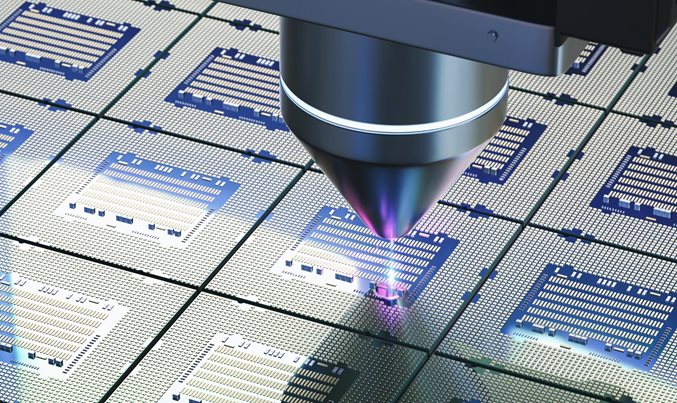
A chip may pass through several stages before reaching a final product. Designers create the architecture and specifications, manufacturers produce the physical semiconductor wafers, and specialized companies may handle packaging and testing. Equipment manufacturers provide the sophisticated machinery required to fabricate increasingly advanced chips.
This structure means investors can gain exposure to different parts of the market. A company selling manufacturing equipment may have a different risk profile from a business designing processors. Similarly, memory manufacturers can behave differently from companies producing chips for automobiles or industrial applications.
Major Factors Driving Chip Industry Growth
Technology demand is one of the most important forces supporting the semiconductor sector. Modern products increasingly require more computing power, connectivity, storage, and energy efficiency. This has expanded the role of chips beyond traditional personal electronics.
Data centers are another important demand center. Cloud platforms require processors, memory, networking components, and specialized accelerators to handle large volumes of information. Meanwhile, advanced computing applications are encouraging companies to invest in increasingly powerful hardware.
Automotive technology is also changing the semiconductor landscape. Modern vehicles can contain chips for safety systems, infotainment, power management, driver assistance, battery management, and connectivity. Electric vehicles add further semiconductor requirements through power electronics and energy-control systems.
Other important growth areas include:
- Industrial automation and smart manufacturing
- Telecommunications infrastructure and connected devices
- Renewable-energy systems and power management
- Consumer electronics and wearable technology
- High-performance computing and advanced networking
These trends can create long-term opportunities, although individual companies may experience different levels of benefit.
Understanding Different Types of Semiconductor Companies
Not all semiconductor stocks offer the same investment characteristics. Understanding their business models can help investors compare companies more effectively.
Fabless companies generally concentrate on chip design while outsourcing manufacturing. Their strengths may include intellectual property, engineering expertise, and product innovation. Their business models can be less capital-intensive than those of manufacturers, although they remain dependent on external production partners.
Foundries manufacture chips designed by other companies. Their businesses require substantial investment in fabrication facilities and advanced production technology. Maintaining technological leadership can require continuous capital spending.
Integrated device manufacturers combine design and manufacturing activities. This can provide greater control over production but may also expose the company to significant capital requirements and manufacturing risks.
Semiconductor equipment companies supply the machines and systems used to manufacture chips. Their fortunes are closely linked to fabrication investment by chipmakers. When manufacturers expand capacity, equipment suppliers may benefit, while reductions in capital expenditure can create pressure.
Key Financial Metrics Investors Should Examine
When evaluating semiconductor stocks, investors should look beyond revenue growth. Semiconductor businesses can appear attractive during periods of strong demand but become expensive or vulnerable when the industry cycle turns.
Revenue growth can reveal whether a company is expanding its market presence, but the source of that growth matters. Investors should determine whether higher sales are coming from sustainable demand, temporary inventory rebuilding, acquisitions, or unusually favorable pricing.
Profit margins are equally important. A company with strong gross and operating margins may possess valuable technology, efficient production, pricing power, or a differentiated product portfolio.
Free cash flow provides another useful perspective because semiconductor manufacturing and research can require considerable investment. Strong accounting profits do not always translate into abundant cash if capital expenditure is extremely high.
Other useful indicators include:
- Research and development spending
- Debt levels and interest obligations
- Capital expenditure
- Inventory growth
- Customer concentration
- Return on invested capital
Looking at several years of financial information can provide a better picture than relying on one quarterly result.
The Role of Semiconductor Cycles
One of the biggest challenges in semiconductor investing is cyclicality. Chip demand does not always rise steadily. Companies may increase production when demand is strong, only to face excess inventory when customers reduce orders.
 During an upcycle, higher utilization and stronger pricing can improve revenue and profitability quickly. In a downturn, manufacturers may cut production, reduce prices, or delay expansion projects. This can cause earnings to decline faster than investors expect.
Inventory deserves particular attention. Rising inventory is not automatically negative because companies may be preparing for stronger demand. However, rapidly increasing inventory combined with weakening sales can signal potential oversupply.
Investors should therefore avoid judging a semiconductor company solely by its strongest growth period. Evaluating how the business performed during previous downturns can reveal its resilience and management quality.
Technology Leadership and Competitive Advantage
Innovation plays a central role in the chip industry. Companies compete through manufacturing processes, chip architecture, energy efficiency, performance, software integration, intellectual property, and production capabilities.
A strong competitive position can create significant advantages. Customers may be reluctant to switch suppliers when changing semiconductor components requires redesigning products, modifying software, or completing lengthy testing and certification processes.
Patents and specialized engineering knowledge can also strengthen a company’s market position. However, technological leadership is not permanent. A business that leads today may face new competitors, changing architectures, or disruptive manufacturing technologies tomorrow.
For this reason, investors should examine whether a company’s research and development efforts are producing commercially successful products rather than simply increasing technical spending.
Risks Associated With Semiconductor Stocks
The potential rewards of semiconductor stocks come with meaningful risks. Industry downturns can reduce orders, while intense competition can pressure selling prices and margins.
Geopolitical tensions can also affect semiconductor supply chains because production and equipment manufacturing are spread across different countries and regions. Trade restrictions or changes in technology-export rules may influence which companies can access particular markets or technologies.
Supply-chain disruptions represent another concern. Semiconductor manufacturing depends on specialized equipment, chemicals, materials, and highly controlled production environments. Problems at one stage can affect companies throughout the ecosystem.
Valuation risk should also be considered. A high-quality company can still produce disappointing investment returns if its share price already reflects exceptionally optimistic expectations. Investors should compare market valuation with realistic assumptions about future growth and profitability.
How to Compare Semiconductor Stocks
A useful comparison should combine business fundamentals with industry positioning. Instead of asking which company has the fastest recent growth, investors can consider several questions.
| Factor | What to Examine | Why It Matters |
|---|---|---|
| Revenue | Growth and consistency | Indicates business expansion |
| Margins | Gross and operating margins | Shows profitability and pricing power |
| Cash Flow | Free cash flow generation | Measures financial flexibility |
| R&D | Product and technology investment | Supports future competitiveness |
| Debt | Leverage and repayment capacity | Indicates financial risk |
| Valuation | Earnings or cash-flow expectations | Helps assess price risk |
| Market Position | Customers and competitive advantages | Indicates business durability |
Comparing companies using these factors can prevent investors from making decisions based solely on share-price momentum or popular market narratives.
Long-Term Approach to Semiconductor Investing
A long-term investor should focus on structural growth rather than attempting to predict every industry cycle. Semiconductor demand can fluctuate substantially over short periods, but the increasing digitization of industries can provide broader growth opportunities over many years.
Diversification can also be valuable. Rather than concentrating entirely on one chip manufacturer, investors may consider exposure to different segments such as design, equipment, manufacturing, automotive semiconductors, and connectivity.
Regular portfolio reviews are important as well. A company’s competitive position, valuation, technology, management strategy, and financial performance can change over time. What appears attractive at one valuation may become less compelling after a significant price increase.
Investors should also distinguish between a strong company and a strong investment opportunity. Even an excellent business can be unsuitable when expectations are excessively high. Patience, valuation discipline, and an understanding of industry cycles can therefore be especially important.
Conclusion
Semiconductor stocks provide exposure to an industry that sits at the heart of modern technological development. From data centers and automobiles to consumer electronics and industrial systems, chips are becoming increasingly important across the global economy.
At the same time, the sector is cyclical, capital-intensive, competitive, and sensitive to technological and geopolitical changes. Successful analysis requires attention to financial performance, innovation, customer relationships, manufacturing capacity, valuation, and long-term industry trends.
Rather than chasing short-term price movements, investors can build a stronger framework by understanding how each company makes money and where it stands within the semiconductor value chain. A disciplined approach can help investors identify businesses with durable advantages while remaining aware of the risks that accompany this fast-changing industry.