
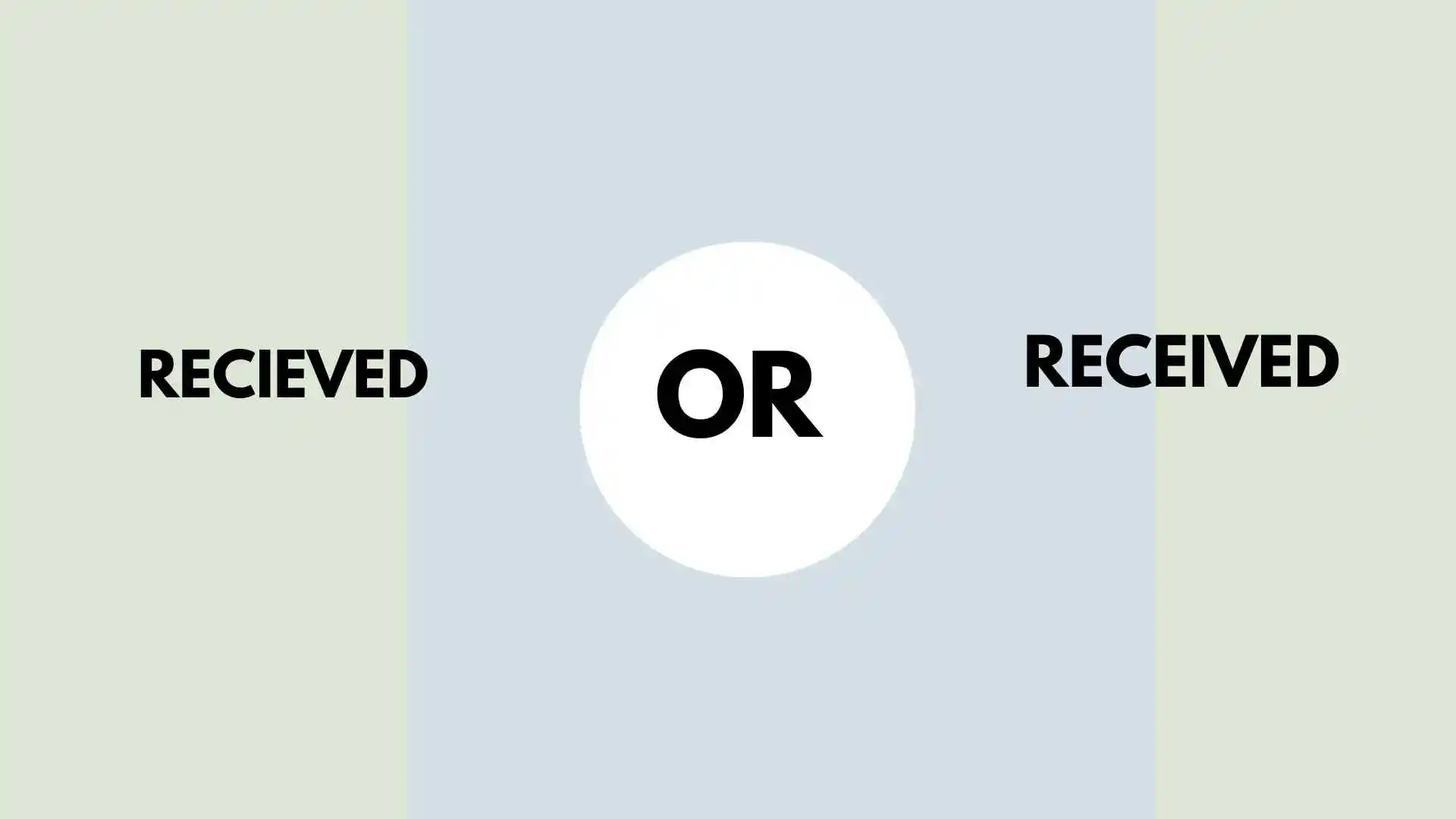
English spelling can sometimes be confusing, even for people who communicate in the language every day. Certain words sound exactly as they are expected to be spelled, while others follow patterns that are difficult to remember. One common example is the confusion between recieved or received. Both versions look similar, and the difference is only a matter of two letters appearing in a different order. However, only one spelling is accepted as correct in standard English.
The correct spelling is “received.” It is the past tense and past participle of the verb “receive,” which means to get, accept, or be given something. People use this word in everyday conversations, professional emails, business correspondence, school assignments, and online communication. The incorrect spelling “recieved” is a frequent typing and spelling mistake, often caused by confusion about whether the letter i or e should come first.
Understanding this spelling difference can help you write more confidently and avoid unnecessary errors. Whether you are preparing an important email, completing an academic assignment, or simply improving your English vocabulary, learning the correct form is a useful step. This guide explains the spelling rule, the meaning of the word, common examples, and practical ways to remember it.
Recieved or Received: Which Spelling Is Correct?
When deciding between recieved or received, the correct choice is received. The spelling follows the conventional pattern used in the word “receive,” where the letters e and i appear in that order after the initial r. Although recieved may look reasonable at first glance, it is not the standard spelling recognized in modern English dictionaries.
The confusion often occurs because English does not have one simple spelling rule that works perfectly for every word. Many learners remember the phrase “i before e,” but they may not remember the exceptions or the conditions under which the pattern is commonly used. As a result, they sometimes write recieved instead of received without noticing the error. The best approach is to learn the spelling of receive and its related forms together, rather than trying to guess the order of the letters every time.
For example, consider the sentence, “I received your message this morning.” The spelling is correct because received describes something that happened in the past. Writing “I recieved your message this morning” introduces a spelling error, even though the meaning remains understandable to most readers. In formal writing, however, correct spelling matters because it improves readability and creates a more professional impression.
What Does Received Mean?
The word received means that someone got, accepted, collected, or was given something. The exact meaning depends on the context in which it appears. A person can receive a letter, a phone call, a payment, a gift, an invitation, information, or feedback. The word is widely used because it describes an action that occurs in personal relationships, education, business, technology, and many other areas of daily life.
For example, when someone says, “She received a package yesterday,” the sentence means that the package reached her or was delivered to her. Similarly, “The student received excellent marks” means that the student earned or was awarded those marks. In a workplace, “We received your application” confirms that an organization has obtained a candidate’s application, although it does not necessarily mean the application has been approved.
The word can also appear in passive constructions. A sentence such as “The award was received by the researcher” focuses on the award and the action rather than placing emphasis on the person performing it. In each case, the spelling remains the same. Learning the meaning and grammatical function of received makes it easier to recognize when the word is appropriate.
Why Do People Confuse Recieved and Received?
One major reason for this spelling mistake is the pronunciation of the word. In many English accents, receive and received are pronounced in a way that does not make the order of the letters obvious. Since the sound does not clearly indicate whether i or e should appear first, writers may rely on memory or apply a spelling pattern incorrectly.
Another reason is the familiar “i before e” guideline taught to many English learners. People may remember the rule but overlook the fact that it has exceptions and limitations. The word receive belongs to a group of words that use ei after the letter c, including deceive, conceive, perceive, and receipt. When someone applies the general guideline without remembering this pattern, the incorrect spelling can appear natural.
Typing habits can contribute to the problem as well. When writing quickly on a mobile phone or computer, people may accidentally reverse adjacent letters. If the writer does not review the text, the error may remain in the final message. Autocorrect tools and spell-checking software can help identify such mistakes, but they are not a substitute for learning commonly confused words.
Understanding the Receive and Received Word Forms
The easiest way to understand the spelling is to begin with the base verb, receive. The word received is formed by adding the appropriate ending to that verb. The spelling of the main word remains consistent, which means the ei sequence is preserved in its different grammatical forms.
| Word form | Grammatical use | Example |
|---|---|---|
| Receive | Present tense or base form | I receive emails daily. |
| Receives | Present tense with a singular subject | She receives regular updates. |
| Received | Past tense | He received a letter yesterday. |
| Received | Past participle | We have received your request. |
| Receiving | Present participle | They are receiving the documents. |
These forms are useful because they demonstrate that the spelling pattern remains stable even when the ending changes. The word receives adds s, received adds ed, and receiving adds ing. None of these forms changes the original ei sequence.
For example, a person might write, “I receive notifications every day,” when describing a regular activity. The same person could write, “I received a notification yesterday,” when describing a completed event. In a sentence such as “I have received your confirmation,” received works with the helping verb have to form the present perfect tense.
Recognizing these relationships makes spelling easier to remember. Instead of memorizing each version as an unrelated word, learners can connect them to the base form receive. This approach is particularly useful for people who are improving their written English or preparing for exams that test vocabulary and grammar.
The Spelling Rule Behind Received
English learners are often introduced to the phrase “i before e, except after c.” This guideline attempts to explain why some words use ie while others use ei. Although it is not a universal rule, it can serve as a helpful reminder when learning certain spelling patterns.
The word receive follows the ei pattern after c. Other examples include deceive, conceive, perceive, and receipt. Remembering these related words can make the spelling of received easier because they share a recognizable letter combination. When you learn one word from this group, you can use it to reinforce the spelling of the others.
However, it is important not to rely entirely on a short rhyme. English contains numerous words that do not follow the familiar guideline, and pronunciation can vary between words. The most reliable strategy is to combine the spelling pattern with repeated exposure, reading, and practice.
How to Remember the Correct Spelling
A practical method is to memorize receive first and then connect received to it. Since received is the past tense and past participle of receive, remembering the base verb provides a dependable foundation. You do not need to learn the two spellings separately.
Another useful technique is to divide the word into smaller parts: re-ceive-d. Focus on the ei sequence in the middle rather than trying to memorize every letter at once. Writing the word several times in meaningful sentences can also strengthen your memory more effectively than repeatedly looking at it without using it.
You can also associate receive with deceive and perceive. These words share the same ei sequence after c, creating a small group of related spelling patterns. Whenever you are unsure, recall one of these familiar words and compare its middle letters with those in receive.
Examples of Received in Everyday English
Understanding a spelling rule is useful, but seeing the word in realistic sentences helps you apply it correctly. Received appears in personal communication, customer service, education, shopping, and workplace conversations. Its meaning remains connected to getting or accepting something, although the object can change considerably.
In everyday communication, someone might say, “I received your invitation and will attend the event.” This sentence confirms that the invitation arrived and that the person intends to participate. Another example is, “She received a birthday gift from her friends.” Here, the word describes the act of being given something.
In professional settings, received is frequently used to acknowledge documents, payments, applications, and requests. For instance, “We have received your payment” confirms that the payment has reached the organization. Similarly, “Your application was received before the deadline” indicates that the application arrived within the required period. Such sentences are common in formal emails because they communicate information clearly and directly.
The word is also used in education and news reporting. A student might have received an award, received feedback from a teacher, or received a certificate after completing a course. A news report could state that a proposal received public support. These examples demonstrate why the word is important to recognize and spell correctly in different contexts.
Common Spelling Mistakes to Avoid
The most direct mistake is writing recieved instead of received. Since the two versions contain the same letters in a different order, the error can be easy to overlook during proofreading. Reading a sentence quickly may not reveal the problem, particularly when the rest of the sentence is grammatically correct.
Another mistake is assuming that the pronunciation provides a reliable guide to spelling. English spelling frequently reflects historical patterns and word origins, so the relationship between sounds and letters is not always straightforward. It is better to learn the written form of commonly confused words rather than attempting to spell them entirely by sound.
Writers may also use received incorrectly in a sentence by confusing tense or grammatical structure. For example, “I received your email yesterday” is correct because the action occurred in the past. However, “I have received your email yesterday” is generally unsuitable in standard English because the specific finished time expression yesterday normally calls for the simple past tense. A more natural sentence is “I received your email yesterday.”
To reduce these errors, focus on both spelling and context. Knowing how a word is spelled is important, but understanding when and how to use it makes your writing more accurate and natural.
Practical Tips for Better Spelling
Improving spelling does not require complicated techniques. A few consistent habits can help you recognize errors before they appear in your final work. The first is regular reading. Books, well-edited articles, and professional documents expose you to correct spelling in meaningful contexts. Over time, repeated exposure can make familiar words easier to recognize.
The second habit is reviewing your writing before submitting or sending it. Even experienced writers make typing mistakes, especially when they are working quickly. A brief review can catch reversed letters, missing endings, and grammatical inconsistencies. Spell-checking tools are useful for this purpose, but reviewing the complete sentence remains important because automated suggestions may not always identify every problem.
Consider using these simple practices:
-
Memorize receive as the base word and received as its past form.
-
Practice related words such as deceive, perceive, and receipt.
-
Read important emails and assignments once before sending them.
-
Use a dictionary or spell-checker when you are uncertain.
These habits can be incorporated into daily writing without requiring a separate study session. The more frequently you use correct spelling in meaningful sentences, the easier it becomes to recall it naturally.
Using Received in Emails and Professional Communication
Correct spelling is particularly valuable in professional communication because emails often serve as written records of requests, decisions, and transactions. A short acknowledgment such as “I received the documents” confirms that the documents arrived. In customer support, an organization may write, “We have received your complaint and will review it shortly.” Both examples communicate the intended message clearly.
In formal correspondence, received can also be used to distinguish between acknowledging an item and taking action on it. For example, receiving an application does not necessarily mean approving it. Likewise, receiving a payment confirmation does not always mean that the payment has been processed successfully. Choosing the right sentence helps prevent misunderstandings and keeps professional communication precise.
Writers should also consider the tone of the message. “I received your email” is direct and neutral, while “Thank you for your email; I have received the information you provided” sounds more formal. Both are appropriate in different situations. The important point is to maintain correct spelling while adapting the sentence to the intended audience.
For students, employees, business owners, and anyone who writes regularly, these small details can make a meaningful difference. Accurate spelling does not guarantee excellent writing on its own, but it supports clarity and demonstrates attention to detail.
Conclusion
The correct spelling is received, not recieved. Although the difference involves only the placement of two letters, it is important to use the standard form in schoolwork, professional correspondence, online communication, and everyday writing. Received is the past tense and past participle of receive, a verb that means to get, accept, or be given something.
The simplest way to remember the spelling is to learn receive first and recognize that the ei sequence stays in place when the word becomes received. Connecting it with words such as deceive, perceive, and receipt can further strengthen your memory. Reading regularly, reviewing written work, and using spelling tools when necessary can also help prevent similar errors.
Whenever you encounter the question of recieved or received, remember that received is the correct form. With a little practice and attention to the letter sequence, you can use the word confidently and improve the accuracy of your English writing.