
English spelling can sometimes be confusing, especially when two words look almost identical but only one follows the correct spelling rules. One common example is the confusion between recieved or received. People frequently make this mistake while writing emails, sending professional messages, completing assignments, or communicating on social media. Although both versions may look reasonable at first glance, only one is accepted as the standard spelling in modern English.
The correct spelling is received, while recieved is a common spelling mistake. This confusion mainly happens because English has several words that follow different vowel patterns, making it difficult to remember which letter should come first. Understanding the spelling rule behind this word can help improve everyday writing and prevent similar mistakes in the future.
Whether you are a student, professional, content writer, or someone trying to improve English communication, learning the difference is useful. In this article, we will explore the correct spelling, meaning, pronunciation, grammar, examples, and practical techniques that make this word easier to remember.
Recieved or Received: Which One Is Correct?
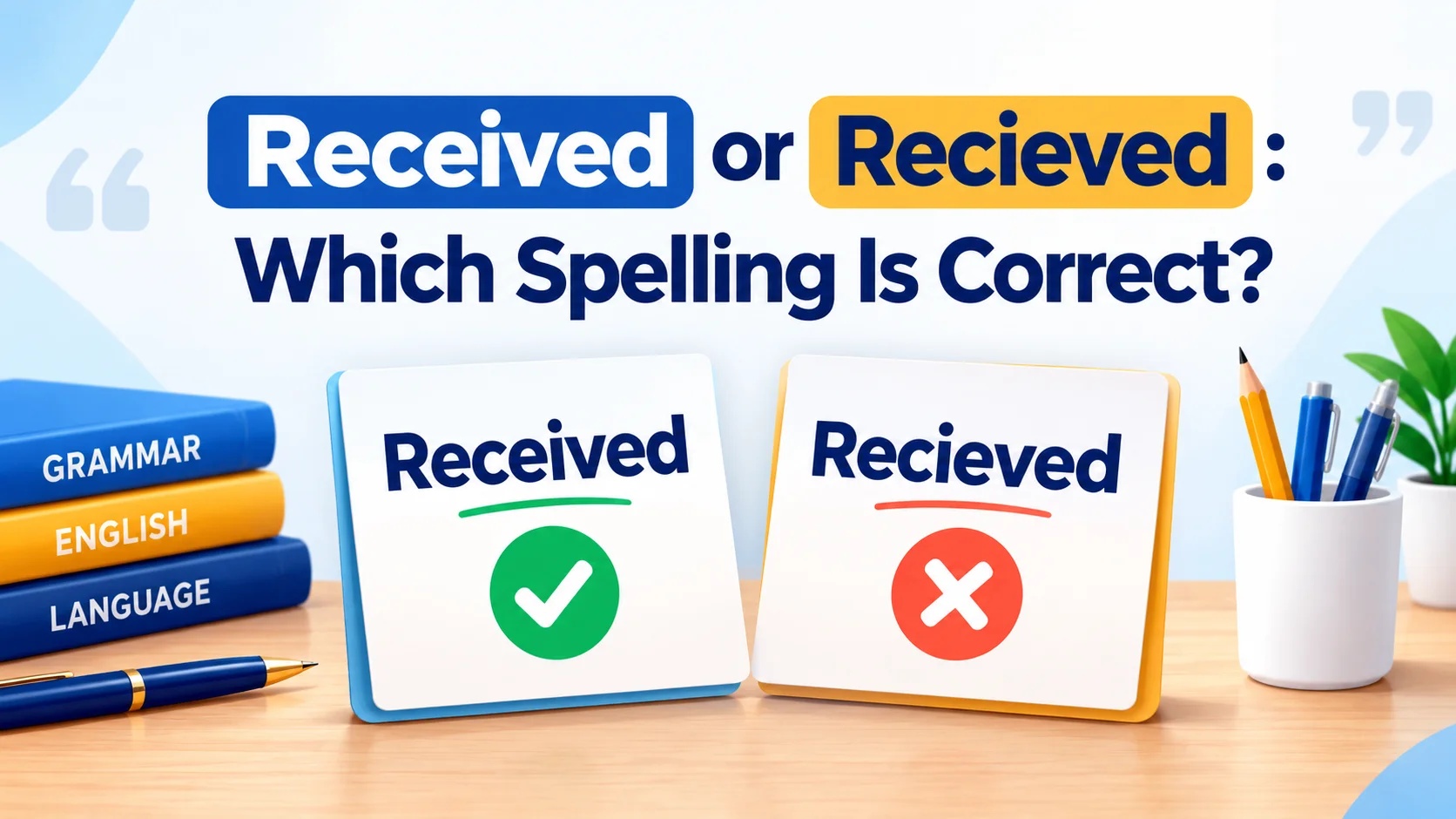
When comparing recieved or received, the correct option is received. It is the past tense and past participle form of the verb receive, which means to get, accept, obtain, or be given something. The spelling follows a familiar English pattern in which the letter i comes before e after the letter c.
The incorrect version, recieved, is commonly produced when writers apply the wrong vowel order. Since English contains many words with different combinations of i and e, it is understandable that people sometimes become uncertain. However, in standard written English, received is the accepted spelling in formal documents, educational writing, business communication, and everyday conversations.
For example, if someone sends you a message and you want to explain that it arrived, you would write, “I received your message yesterday.” Writing “I recieved your message yesterday” would be considered a spelling error.
What Does Received Mean?
The word received describes the action of getting or accepting something from another person, organization, or source. It can refer to physical objects, information, communication, payments, invitations, documents, or opportunities. Its meaning depends on the context in which it is used.
For instance, when a customer gets a package from an online shopping company, the customer has received an order. Similarly, when an employee gets a salary, a student gets examination results, or a business gets a payment from a client, the same word can be used to describe the action.
Received is also widely used in professional communication because it provides a simple way to confirm that something has arrived or been acknowledged. A person might write, “We have received your application” to inform an applicant that their documents have successfully reached the organization.
Understanding the Spelling Rule Behind Received
One of the easiest ways to understand the correct spelling is to learn the relationship between the letters i and e. English learners are often taught the spelling guideline “i before e, except after c.” Although this rule has several exceptions, it explains why received follows its particular spelling pattern.
In the word receive, the letters i and e appear in that order after the letter c. The same pattern remains when the word changes into its past tense form, received. Adding the letter d does not change the original spelling arrangement.
This is why remembering the base word receive is helpful. Once you know how to spell the original verb, you can easily form related words such as receives, receiving, and received without changing the i-e combination.
Why Do People Commonly Misspell Received?
There are several reasons why writers make this spelling mistake. First, English pronunciation does not always provide a clear indication of how a word should be written. The sound of received may not immediately remind someone whether the i or e should appear first.
Second, people often remember spelling patterns incorrectly. They may have learned the general i-before-e guideline but forget the exception involving words that place e before i after c. As a result, they accidentally reverse the two vowels.
Another reason is typing speed. When writing quickly on smartphones, laptops, or computers, people sometimes produce spelling mistakes without noticing them. If the incorrect spelling becomes a repeated habit, it may continue appearing in emails, assignments, and online content.
Meaning and Usage of Received in Different Situations
The word received is useful in many situations because it can describe different types of communication and transactions. Understanding its practical applications makes it easier to use correctly.
In personal communication, received can indicate that someone has obtained a message, photograph, invitation, or gift. For example, a person might say, “I received your birthday invitation this morning.” This sentence confirms that the invitation arrived.
In business communication, the word is frequently used to acknowledge documents, orders, applications, and payments. A company representative might write, “We received your payment and will process your order shortly.” This sounds clear and professional.
In education, students and teachers use the word when discussing examination results, assignments, certificates, and academic information. For example, “She received excellent marks in her final examination” explains that the student obtained a particular result.
Examples of Received in Everyday English
Examples are an effective way to understand how a word works in different sentences. Received is used in both formal and informal communication, making it an important part of everyday English vocabulary.
Consider the following examples:
-
I received your email this morning.
-
She received a beautiful gift from her friend.
-
The company received several applications for the position.
-
We received confirmation of the booking yesterday.
-
He received an award for his outstanding performance.
Each sentence describes something that was obtained, accepted, or delivered. The word remains the same even though the subject and situation change.
In professional settings, the word can also help make communication more precise. For example, “Your documents have been received” is a formal way of confirming that the required documents have arrived. Similarly, “The office received the complaint last week” clearly communicates when the complaint was submitted.
Difference Between Receive, Receives, Receiving, and Received
Understanding the different forms of receive can prevent grammatical errors. Although these words share the same basic meaning, their grammatical functions differ depending on the tense and sentence structure.
| Word | Grammatical form | Example |
|---|---|---|
| Receive | Base form | I receive emails daily. |
| Receives | Present tense | She receives regular updates. |
| Receiving | Present participle | He is receiving a package. |
| Received | Past tense and past participle | They received the documents. |
Receive is generally used with subjects such as I, you, we, and they in the simple present tense. Receives is used with singular third-person subjects such as he, she, and it. Receiving describes an ongoing action, while received commonly describes something that happened in the past or an action completed by someone.
Learning these forms together makes vocabulary development easier because you understand how the same verb changes according to grammatical requirements.
How to Remember the Correct Spelling Easily
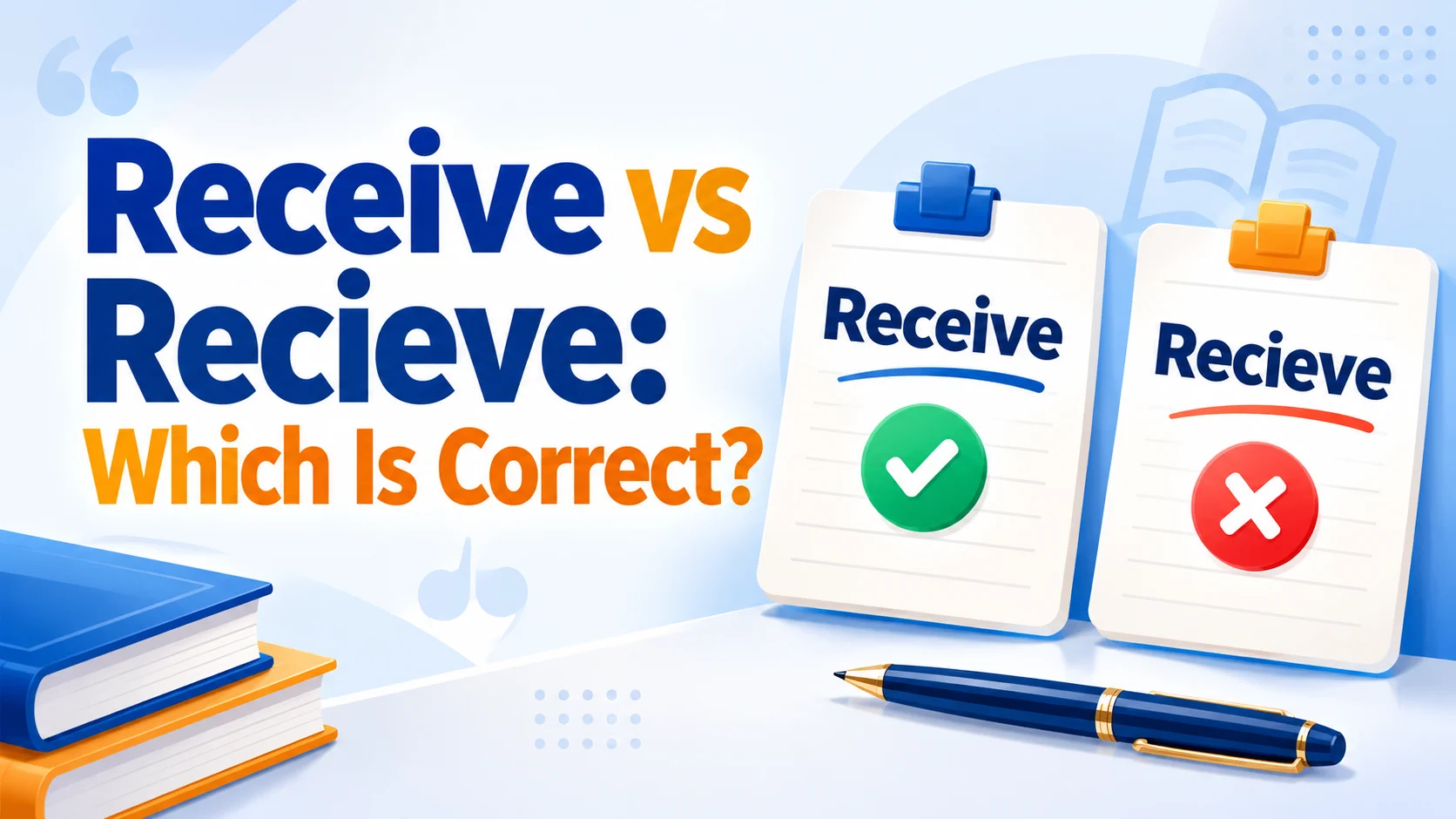
Remembering the spelling of received becomes much easier when you connect it with the base word receive. Instead of trying to memorize the entire word separately, focus on the spelling pattern in its original form.
A useful technique is to divide the word into smaller parts: re-ceive-d. This visual method helps you notice that the i comes before the e after c. When you add the past-tense ending, the original letter arrangement remains unchanged.
Another helpful approach is to write the word several times while using it in meaningful sentences. For example, write “I received the notification,” “She received the invitation,” and “We received the order.” Repeated exposure helps build familiarity and improves spelling accuracy.
You can also remember the following simple tips:
-
Always remember the base word receive.
-
Keep the i before e after the letter c.
-
Read your sentences aloud while checking their spelling.
-
Use a dictionary or spell-checking tool when uncertain.
These techniques are particularly helpful for students and people who regularly write professional emails, articles, reports, and other documents.
Common Grammar Mistakes Related to Received
Spelling is not the only area where people experience difficulty with this word. Some writers also use it incorrectly when constructing sentences. Understanding the grammatical role of received can help avoid these problems.
One common mistake is using the base form after an auxiliary verb when the sentence requires a past participle. For example, “I have receive your email” is incorrect. The grammatically correct sentence is “I have received your email.” The auxiliary verb have requires the past participle form in this construction.
Another mistake involves confusing the simple past tense with the present tense. For example, “She receive the package yesterday” is incorrect because the sentence describes a completed action in the past. The correct version is “She received the package yesterday.”
Writers should also avoid unnecessary repetition. A sentence such as “I received the message that you sent me” can sometimes be simplified to “I received your message.” Clear and direct sentences generally make communication more effective.
Received in Formal and Informal Writing
The word received works well in both formal and informal communication. However, the way it appears in a sentence can change depending on the situation.
In informal conversations, people might say, “I received your text” or “We received the tickets.” These expressions are straightforward and suitable for everyday interactions. They communicate the required information without making the conversation unnecessarily complicated.
In formal communication, received often appears in professional acknowledgements. Businesses may use phrases such as “Your application has been received” or “We have received your request for additional information.” These sentences are appropriate for customer support, administration, recruitment, and official correspondence.
Using the correct spelling in both situations is important because spelling mistakes can affect the readability and professional appearance of written communication.
Why Correct Spelling Matters in Digital Communication
Digital communication has become an essential part of modern life. People regularly exchange messages through email, messaging applications, social networking platforms, workplace software, and online services. As a result, accurate spelling is an important part of presenting information clearly.
A small spelling mistake may not completely change the meaning of a sentence, but repeated errors can make writing appear careless. This can be particularly important when communicating with customers, employers, teachers, business partners, or clients.
For example, a business sending an order confirmation should ensure that its message is grammatically correct. A sentence such as “We have received your order” creates a clear impression. On the other hand, an incorrectly spelled version can reduce the overall quality of the communication.
Modern spell-checking applications can identify many common errors, but they should not replace basic spelling knowledge. Some incorrect words may be overlooked depending on the software and context. Developing a habit of proofreading remains one of the most reliable ways to improve writing.
Frequently Asked Questions About Received
1. Is recieved a correct English word?
No. Recieved is not the standard spelling of the word. The correct spelling is received. It is the past tense and past participle form of receive. Writers should always use received in academic assignments, professional documents, emails, and everyday communication.
2. Why is received spelled with ei instead of ie?
Received follows the common spelling guideline that places e before i after the letter c. The original verb is receive, and the same spelling pattern remains when the past-tense ending is added.
3. What is the difference between receive and received?
Receive is the base form of the verb and is commonly used to describe an action in the present or future. Received is the past tense and past participle form. For example, “I receive messages daily” describes a regular activity, while “I received a message yesterday” describes a completed action.
4. Is received suitable for professional emails?
Yes. Received is commonly used in professional emails to acknowledge messages, documents, payments, and requests. Expressions such as “We have received your application” and “I received your email” are grammatically correct and widely understood.
5. How can I avoid spelling mistakes while writing?
You can improve spelling accuracy by reading regularly, learning common spelling patterns, practicing difficult words, and proofreading your writing before sending it. Using reliable spell-checking tools can also help identify mistakes that you might otherwise overlook.
Conclusion
Understanding the difference between recieved or received is a small but valuable step toward improving English spelling and communication skills. Although both versions may look similar, only received is the correct standard spelling. It is the past tense and past participle form of receive and is commonly used when describing something that has been obtained, accepted, or delivered.
The easiest way to remember this spelling is to focus on the base word receive and its i-e combination after the letter c. Practicing the word in everyday sentences, understanding its grammatical forms, and proofreading written content can help prevent similar mistakes.
Whether you are writing an academic assignment, preparing a professional email, creating online content, or communicating with friends, correct spelling makes your message clearer and more professional. By understanding this simple spelling rule, you can confidently use received in different situations and gradually strengthen your overall English writing skills.