
English spelling can sometimes be confusing, even for people who use the language every day. Certain words sound similar when spoken but have different letter arrangements when written. One common example is the confusion between “recieved” and “received.” Both versions may look familiar, especially when typing quickly, but only one follows the standard spelling rules of English. Understanding the difference can help improve writing accuracy, communication skills, and confidence in everyday situations.
The confusion usually happens because of the way people remember vowel combinations. Many English learners know the famous spelling rule involving the letters I and E, but applying that rule consistently can be difficult. When someone writes an email, prepares an assignment, sends a business message, or completes an online form, a small spelling mistake can make the writing look less professional. Learning the correct version is therefore useful for students, employees, professionals, and anyone who wants to communicate clearly.
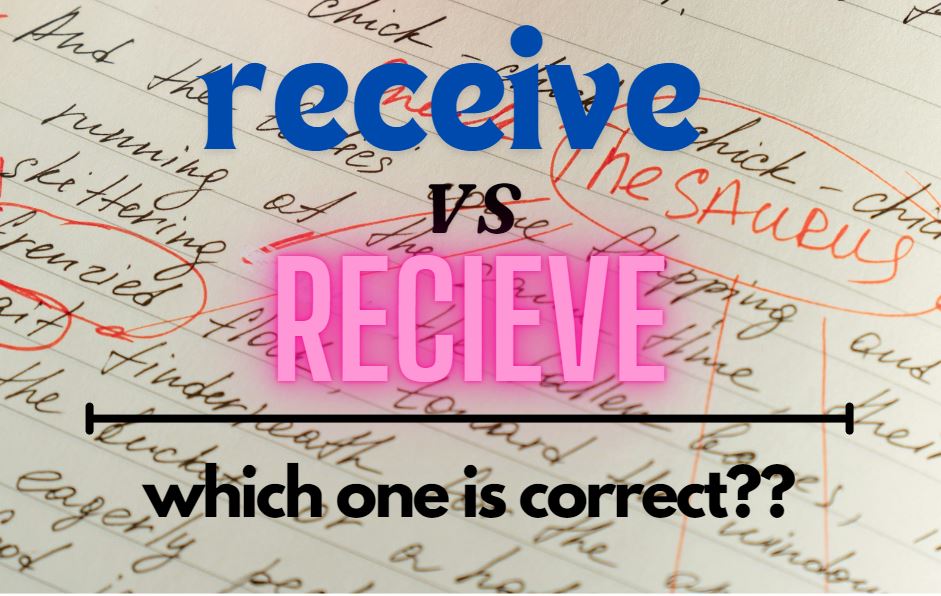
If you have ever wondered which spelling is correct, the answer is straightforward: received is the correct spelling. The word “recieved” is a common spelling mistake and is not accepted as the standard form in modern English. This article explains its meaning, spelling pattern, pronunciation, grammar, examples, and practical techniques for remembering it.
Recieved or Received: Which Spelling Is Correct?
When comparing recieved or received, the correct spelling is received. It contains the letters E-I after the letter C, while the incorrect version places I-E in that position. Although the difference involves only two letters, it is important because English spelling follows established conventions that determine how words should be written.
The word received is the past tense and past participle of the verb receive. It describes the action of getting, accepting, collecting, or being given something. For example, when someone gets a message from a friend, that person has received a message. Similarly, when a customer gets a delivery, the customer has received an order. These examples demonstrate how frequently the word appears in ordinary communication.
The incorrect spelling often occurs because people remember the general I-before-E rule and apply it without considering the letter that comes before the vowel combination. However, the word receive follows the exception associated with the letter C. Remembering this pattern makes it easier to recognize the correct spelling whenever the word appears in writing.
Understanding the Meaning of Received
Received is a verb form that generally means to get something that another person sends, gives, offers, or provides. It can refer to physical objects, information, communication, invitations, payments, opportunities, or experiences. The meaning depends on the situation in which the word is used.
For example, if a person purchases a smartphone online and the delivery arrives at their home, they have received the smartphone. If a student gets an email containing examination results, the student has received the results. In a professional environment, an employee might receive instructions from a manager or receive confirmation after submitting a report.
The word can also describe less physical experiences. Someone may receive support from friends during a difficult period, receive recognition for professional achievements, or receive positive feedback after completing a project. In each situation, the basic idea remains the same: something is delivered, communicated, offered, or provided to someone.
Different Contexts in Which Received Is Used
The word appears in several areas of everyday life. In personal communication, people use it when discussing messages, photographs, invitations, and gifts. In business communication, it commonly appears in conversations about payments, applications, documents, and customer orders.
In education, students may receive assignments, certificates, examination results, or feedback from teachers. In technology, users receive notifications, verification codes, software updates, and digital files. These situations show that received is not limited to one particular subject or profession.
Why Do People Confuse These Two Spellings?
English contains many spelling patterns that appear predictable but have exceptions. The confusion between recieved and received mainly develops because people remember the I-before-E spelling rule but forget its limitations. The rule is often taught as a simple guideline, but it does not apply to every English word.
Another reason is pronunciation. In ordinary conversation, the vowel combination in received does not always sound clear enough to reveal the exact letter order. When people write based on how a word sounds, they may choose the wrong combination. This becomes especially common when typing quickly or relying entirely on memory.
Digital communication can also contribute to the problem. People frequently write messages on smartphones, tablets, and computers. Although spelling correction tools can identify many mistakes, they are not perfect. Some users also ignore spelling suggestions or become dependent on automatic correction instead of learning the correct form.
The best approach is to understand the spelling pattern rather than memorize the word without context. Once you know why received uses E-I after C, you can recognize the correct arrangement more confidently.
The I Before E Spelling Rule Explained
One of the most commonly taught English spelling guidelines is “I before E, except after C.” This rule suggests that I generally comes before E in certain words, while E comes before I when the combination follows C.
For example, words such as believe, achieve, and field contain I before E. However, words such as receive, ceiling, and deceive use E before I because the combination follows the letter C.
Although this guideline is useful, it is not a universal rule. English contains several exceptions, including words such as weird, their, and science. Therefore, it is better to treat the guideline as a helpful memory technique rather than an absolute spelling law.
Examples of the Rule
| Word | Correct letter pattern | Explanation |
|---|---|---|
| Receive | E-I | E comes before I after C |
| Ceiling | E-I | Follows the after-C pattern |
| Believe | I-E | I comes before E |
| Achieve | I-E | Follows the general pattern |
| Deceive | E-I | E comes before I after C |
Looking at these examples helps explain why received follows the E-I arrangement. The same spelling pattern appears in receive because received is formed by adding the appropriate ending to that verb.
Received in Different English Sentence Structures
Understanding a word’s spelling is important, but knowing how to use it correctly in sentences is equally valuable. Received is the past tense and past participle of receive. It can appear in simple past sentences and in perfect tense constructions.
In the simple past tense, it describes an action that happened and was completed in the past. For instance, “I received your invitation yesterday” explains that the invitation arrived at an earlier time. Similarly, “She received a promotion last month” describes a completed event.
The word also appears in the present perfect tense when used with has or have. Consider the sentence, “I have received your application.” Here, the sentence communicates that the application has arrived and that the result is relevant to the present situation. In the same way, “They have received the payment” confirms that the payment has been delivered.
Practical Sentence Examples
The following examples demonstrate how received can be used naturally in different situations:
- I received your message this morning.
- She received an award for her excellent performance.
- We received the documents before the deadline.
- The customer received the package yesterday.
- He has received confirmation of his registration.
Each example uses the same spelling, regardless of the subject or type of communication. Practising these sentence structures can make the word easier to remember.
Received vs Receive: Understanding the Difference
Receive and received are related forms of the same verb, but they are used in different grammatical situations. Receive is the base form, while received is the simple past tense and past participle.
For example, “I receive several emails every day” describes a regular activity. However, “I received an email yesterday” describes something that happened in the past. The difference is related to tense rather than meaning.
Received is also used with helping verbs such as has, have, and had. For example, “She has received the invitation” uses the present perfect tense, while “They had received the information before the meeting” uses the past perfect tense.
Learning these forms together is useful because it helps writers understand not only spelling but also sentence construction. Instead of treating each form as an unrelated word, learners can recognize how the verb changes according to grammatical requirements.
Common Mistakes to Avoid When Writing Received
Spelling mistakes often happen because people write quickly without reviewing their sentences. Since received contains a familiar vowel combination, it is easy to accidentally reverse the two letters. However, developing a simple checking habit can prevent this error.
Another common mistake is assuming that spell-checking software will automatically correct every problem. Most modern writing applications provide spelling suggestions, but users should still understand the correct form. Automatic correction can sometimes replace words incorrectly, especially when the surrounding sentence is unclear.
Writers should also avoid confusing the spelling of received with related words such as receiver, receiving, and receipt. These words are connected in meaning but have different endings and grammatical functions.
A few practical habits can help prevent these mistakes:
- Remember that receive contains E-I after C.
- Read important emails and documents before sending them.
- Practise writing the word in complete sentences.
- Use a reliable dictionary when uncertain.
- Pay attention to spelling suggestions instead of accepting them automatically.
These small steps can gradually improve writing accuracy and reduce repeated errors.
How to Remember the Correct Spelling Easily
Memorizing individual words can sometimes feel difficult, especially when English contains many exceptions. A better approach is to connect the word with a simple pattern that you can remember whenever you need to write it.
For received, the easiest technique is to remember the base word receive. Since received comes from receive, the original E-I combination remains unchanged when the past-tense ending is added. This means you do not need to learn two completely different spellings.
Another useful technique is to group related words together. For example, receive, received, receiver, and receiving share the same basic spelling pattern. Writing these words several times can help your brain recognize their structure.
You can also create short practice sentences using different situations. Write about receiving a message, receiving a gift, receiving information, or receiving an invitation. Repeating the word in meaningful contexts is generally more effective than copying it without understanding its use.
Is Received Correct in British and American English?
Some English words have different spellings in British and American English. For example, words such as colour and color, organise and organize, and centre and center demonstrate regional differences. However, received does not follow this type of variation.

The spelling received is standard in both British and American English. Whether you are writing an academic assignment in India, preparing a business email for an American company, or communicating with someone in the United Kingdom, the same spelling should be used.
This consistency makes the word relatively easy to learn once the correct letter arrangement is understood. Writers do not need to choose between regional variations or adjust the spelling according to their audience.
The Importance of Correct Spelling in Professional Communication
Correct spelling plays an important role in clear and professional communication. Although a single typing mistake may not change the meaning of a sentence, repeated errors can affect how readers perceive a document. In professional environments, accuracy helps create a positive impression and makes information easier to understand.
Consider a workplace email confirming that a payment has arrived. Writing “We have received your payment” communicates the information clearly and professionally. Using an incorrect spelling may not prevent the recipient from understanding the message, but it can make the communication appear less carefully prepared.
The same principle applies to resumes, reports, educational assignments, applications, and customer support messages. Readers generally expect written communication to be accurate, particularly when it represents a business or organization.
Developing strong spelling habits is therefore more than an academic exercise. It is a practical communication skill that can support personal development, workplace confidence, and effective writing.
Conclusion
English spelling becomes easier when learners understand the patterns behind individual words instead of relying only on memory. The difference between these two versions is simple: received is correct, while recieved is an incorrect spelling. The correct word is the past tense and past participle of receive and is commonly used when describing something that has been given, delivered, accepted, or communicated.
Remembering the I-before-E-except-after-C guideline can help you avoid this particular mistake. It is also useful to practise related forms such as receive, receiver, receiving, and received so that the spelling becomes familiar through regular use.
Whether you are writing a personal message, preparing an academic assignment, or communicating professionally, using the correct spelling makes your writing clearer and more polished. With a little practice and attention to detail, you can confidently use received whenever the situation requires it.